
Technology meets Fencing
Built to last.
PVC fencing and gates, installed by Avodah Landscape across Christchurch and Canterbury.
No staining. No repainting. No rot.
5 Year Warranty
✳︎
Weather Proof
✳︎
Low Maintenance
✳︎
Classic Look
✳︎
Private and Secure
✳︎
5 Year Warranty ✳︎ Weather Proof ✳︎ Low Maintenance ✳︎ Classic Look ✳︎ Private and Secure ✳︎
Is PVC Fencing for you?
-
Most people don’t pick a fence because they love fences. They pick one because the old one has become a job.
It starts small. A paling splits. The stain fades. A post goes soft at the base, and one windy night the whole run starts to lean. Every summer you tell yourself you’ll deal with it, and every summer something else comes first.
PVC fencing takes that job away.
No more weekends of scraping and staining. It’s made to be left alone.
No rot. PVC isn’t wood, so it has nothing to rot.
No splinters. Smooth surfaces suit kids, dogs and bare feet.
A finished look from day one. You get the warmth of timber in a woodgrain finish, or a clean white or beige.
Less money on upkeep over time. PVC usually costs more at the start, but you stop paying for stain, paint and repairs.
Our customers don’t choose PVC fencing because its cheap, they choose it because it buys them back time to spend where it matters.
-
Say “plastic fence” and many people picture something thin and cheap. Here’s what a good PVC fence actually is, how it’s made, and how to tell a good one from a poor one.
The short version:
PVC stands for polyvinyl chloride, the same family of rigid plastic used for pipes and window frames. A PVC fence (some people call it a vinyl fence) is made from posts, rails and panels shaped from this material in a factory and then installed on your property. It doesn’t need painting and it doesn’t rot.
What’s inside it:
A PVC fence starts as a white powder resin that’s mixed with stabilisers, UV inhibitors and impact modifiers. Each ingredient has a job.
PVC resin is the base material.
Titanium dioxide and UV inhibitors protect it from the sun. Without titanium dioxide, vinyl is very susceptible to UV rays, which can weaken and discolour it.
Impact modifiers help it resist cracking when it’s knocked.
Stabilisers protect the material from heat while it’s made. Heat stabilisers and colour pigments are part of the blend.
The ingredients are mixed, heated and pushed out (extruded) into long lengths, similar to lumber. Those lengths are cut, drilled and packed as posts, rails and panels.
One layer or two?
PVC fencing is made in two common ways:
One material all the way through. The colour is the same from surface to core.
A tough core with a protective outer layer. This is called co-extrusion, and the inner layer is mixed with modifiers that help stop it cracking. The outer layer gives extra UV protection.
-
A PVC fence system is made up of posts, rails, panels, caps and gates that fit together. The privacy kits come in 1.8 m by 1.8 m sections. Matching gates are available for every style.
How it behaves in real life
We’ll be straight about this, because it helps you decide.
In the sun. In a 1000-hour accelerated UV test, the woodgrain panel showed only slight colour change.
In the wind. Vinyl fence is made to stand up to specified wind loads if it’s installed according to the instructions. A full privacy panel was lab-tested to about 100 km/h of wind pressure.
In hot and cold weather. Like any material, PVC moves slightly with temperature, and good installers allow for it. Lower-grade PVC can become brittle and crack under hard impact in extreme cold. That’s one reason quality and the warranty matter.
Knocks and scratches. It’s tough, but not unbreakable. A big impact, such as a vehicle, can break it, and a line trimmer can scratch it.
Cleaning. Wash it with a hose and mild soap.
-
Quality varies between products. Wall thickness and ingredients both affect strength, and many cheap panels are made from thin material that can crack or chip. So ask five questions of any PVC fence supplier, including us:
Has it been independently tested, and can I see the reports? Ours has been lab tested. (Please ask for the reports)
What UV protection is built in? The woodgrain panel passed the 1000-hour UV test with only slight colour change.
Is it capable of 100km/h winds? In a lab test, a full privacy fence panel resisted a load equal to about 100 km/h of wind pressure without failing.
What does the warranty cover, in writing? 5 year product warranty, 3 year workmanship warranty
Who installs it, and to whose specification? Avodah Landscape installs it, to the manufacturer’s specification.
-
It suits you if you want low upkeep, you’re staying put, and you want privacy that looks good every day.
Timber may suit you better if your budget is tight, you’re selling soon, or you’re on a shared boundary where your neighbour only has to pay for a standard fence. We’ll quote both so you can compare real numbers.
Choose your Style
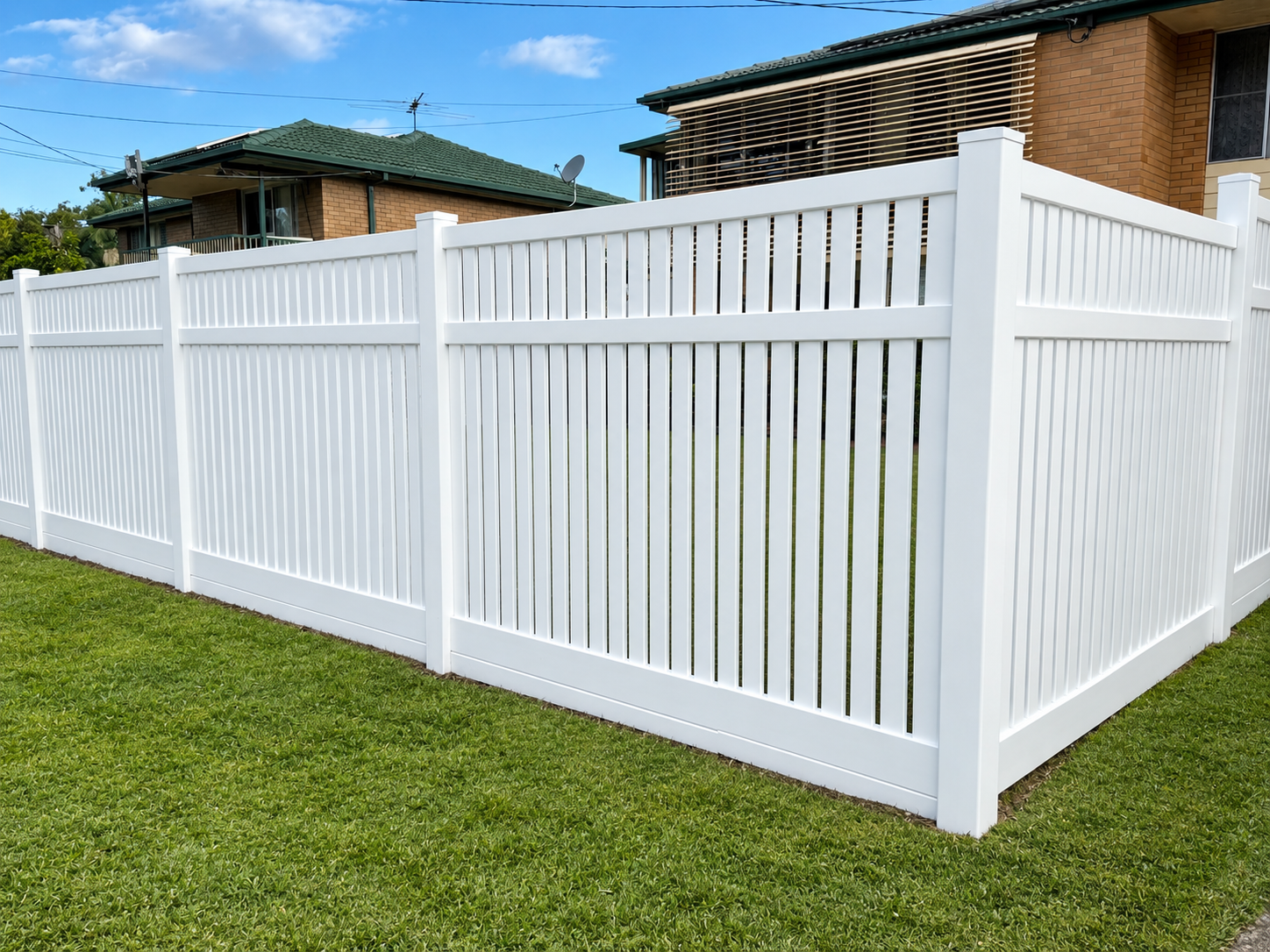
Premium Semi-Privacy PVC Slat Fence – 1.8m × 1.8m
Product Code: UK102
Modern styling. Refined privacy. Lasting performance.
Create a clean, contemporary boundary with the UK102 Premium Semi-Privacy PVC Slat Fence. Designed for homeowners who value both appearance and practicality, this fencing system delivers a sophisticated finish while maintaining a lighter, more open feel than a traditional solid privacy fence.
Featuring interlocking tongue-and-groove (T&G) panels and aluminium-reinforced rails, the UK102 combines modern styling with added structural support. Its crisp white finish complements a wide range of residential exteriors, making it an excellent choice for boundary fencing where presentation matters on both sides.
Product Specifications
Product code: UK102
Fence height: 1.8m (1800mm)
Section width: 1.8m (1800mm)
Colour: White
Product type: PVC semi-privacy fencing kit
Construction: Tongue-and-groove panels with aluminium-reinforced rails
Key Features & Benefits
A Refined, Good-Neighbour Design
Designed to create an attractive, finished appearance on both sides, making it ideal for shared boundaries where presentation matters to both you and your neighbour.
Contemporary Semi-Privacy Styling
The slat-style design offers a modern alternative to conventional fencing, providing a balance between privacy and a more open visual appearance. The degree of privacy and airflow will depend on the panel spacing and final configuration.
Aluminium-Reinforced Rails
Internal aluminium inserts provide additional rail stiffness, helping resist sagging and maintain a straighter, more consistent fence line over time.
UV-Stabilised for Outdoor Use
Manufactured using UV-stabilised PVC to help resist fading during prolonged exposure to sunlight, making it a practical option for New Zealand properties.
Low-Maintenance Performance
No painting, staining or oiling required. Simply rinse or wash the surface as needed to maintain its clean, attractive appearance.
Durable, Weather-Resistant Materials
PVC offers a practical alternative to traditional timber and metal fencing, avoiding timber rot and reducing concerns associated with rust, peeling paint and corrosion.
Suitable for Residential Properties
Designed for residential boundary applications, providing a low-maintenance fencing solution for family homes and pet-friendly outdoor spaces.
What's Included
Each 1.8m × 1.8m fence section includes:
1 × Fence post
2 × Rails (top and bottom)
2 × Aluminium reinforcement inserts
16 × Interlocking tongue-and-groove (T&G) privacy panels
Channels and accessories required for assembly
Ideal Applications
The UK102 Premium Semi-Privacy Fence is particularly suited to:
Residential boundary fencing
Shared boundaries requiring an attractive finish on both sides
Contemporary homes and landscaped gardens
Long, straight fence runs where rail stiffness is important
Outdoor spaces where low maintenance and modern styling are priorities
A Smarter Approach to Modern Boundary Fencing
Combining contemporary semi-privacy styling with reinforced rail construction and a crisp white finish, the UK102 offers an attractive alternative to traditional timber fencing.
Its low-maintenance PVC construction helps reduce ongoing upkeep, while the aluminium-reinforced rails provide additional support for a neat, consistent finish.
Contact us today to discuss your fencing project, installation requirements and quantity options.
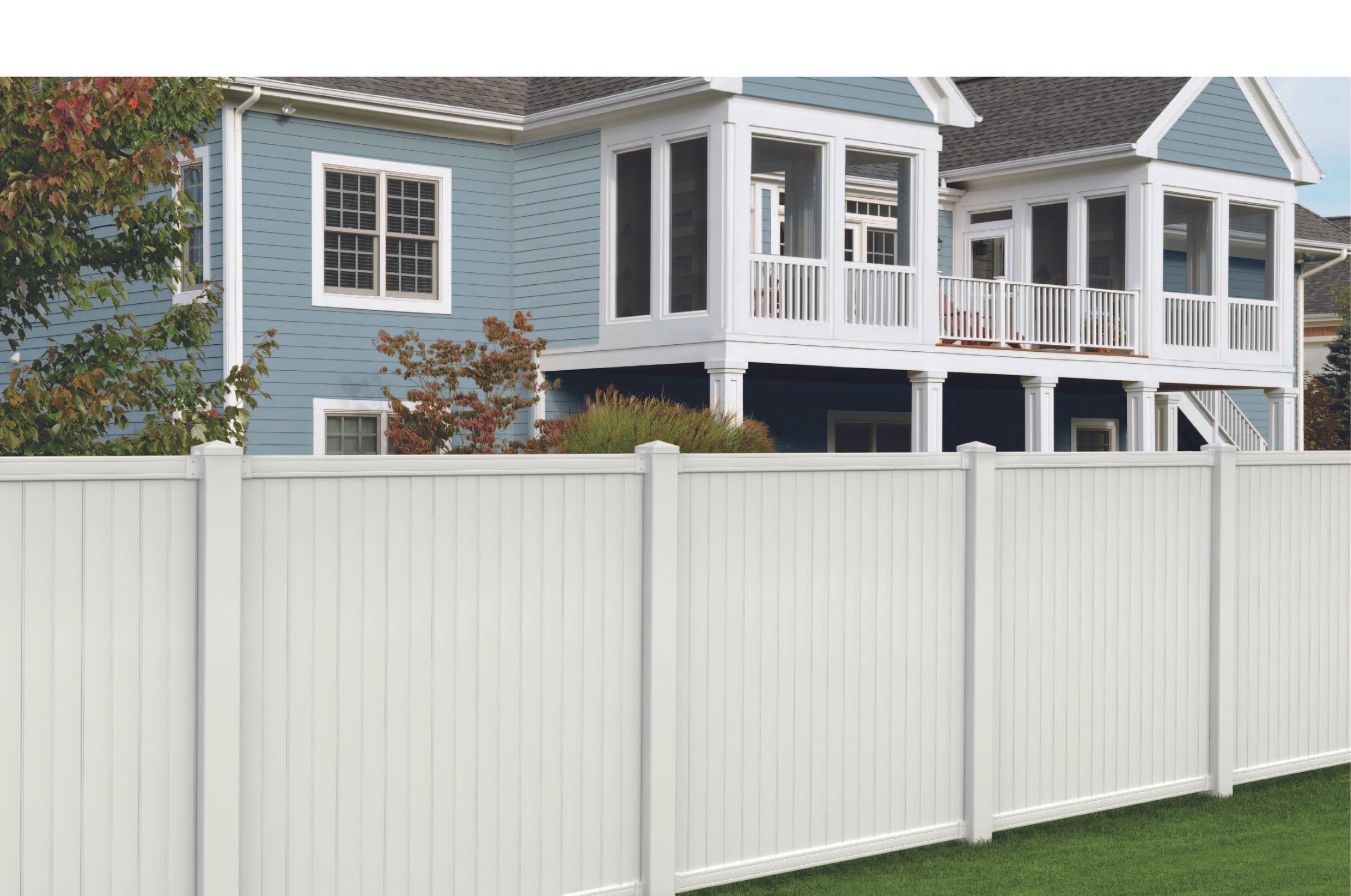
Premium Classic White Privacy Fence – 1.8m × 1.8m
Product Code: LJ8601
Enhanced stability. Simplified installation. Lasting privacy.
Designed for homeowners seeking a practical privacy solution, the LJ8601 Storm Series PVC Fence combines a clean white finish with reinforced construction and a DIY-friendly installation system.
Featuring full-height tongue-and-groove panels, a shorter 1.8m section span and an aluminium-reinforced bottom rail, this fencing system is designed with exposed properties and higher-wind areas in mind. It offers a durable, low-maintenance alternative to traditional timber fencing, without the need for painting or staining.
Product Specifications
Product code: LJ8601
Fence height: 1.8m (1800mm)
Section width: 1.8m (1800mm)
Coverage: 1.8 linear metres per kit
Colour: White
Fence style: Full-privacy vertical tongue-and-groove panels
Installation: Bracket-mounted rail system
Key Features & Benefits
Full-Privacy Design
Interlocking vertical tongue-and-groove (T&G) panels create a solid privacy barrier, helping screen neighbouring properties and provide a more secluded outdoor environment.
Storm Series – Shorter 1.8m Span
The shorter section width is designed to help manage wind loading compared with wider panels of otherwise similar construction. This makes it a practical option to consider for properties with greater exposure to the elements. Suitability will depend on site conditions and correct installation.
DIY-Friendly Bracket Installation
The bracket-mounted rail system simplifies assembly and helps make post and rail alignment more manageable during installation.
Aluminium-Reinforced Bottom Rail
An internal aluminium insert strengthens the bottom rail, helping reduce sagging and maintain a straighter, more consistent fence line over time.
Weather-Resistant PVC Construction
Designed for outdoor use, PVC provides a practical alternative to timber without the ongoing concerns of rot or regular protective treatments.
Low-Maintenance White Finish
Enjoy a crisp, clean appearance without the need for painting, staining or sealing. Occasional washing helps keep the fence looking its best.
What's Included
Each 1.8m × 1.8m kit includes:
1 × PVC fence post
2 × Horizontal rails (top and bottom)
9 × Interlocking tongue-and-groove privacy panels
1 × Aluminium reinforcement insert for the bottom rail
4 × Mounting brackets with screws
1 × Flat post cap
Why Choose the 1.8m Storm Series?
Designed with Wind Exposure in Mind
The shorter panel span can help reduce the load transferred to individual fence sections compared with wider sections of similar design.
Straightforward DIY Assembly
Bracket-style installation offers greater flexibility when aligning rails and assembling the fence.
Additional Rail Support
The reinforced bottom rail helps resist sagging and supports a neat, consistent finish.
Warranty
Covered by our Product Limited Warranty, subject to the applicable terms, conditions and exclusions. Please refer to our Warranty Policy for full details.
Pickup & Nationwide Delivery
Pickup: Christchurch
Delivery: Nationwide shipping available throughout New Zealand
Freight quotations: Please provide your suburb, postcode and required quantity for a delivery quote.
Matching Gates Available
Complete your fencing project with a matching pedestrian gate for a coordinated finish.
Contact us for a tailored fence and gate package quotation.
A Practical Privacy Solution for Exposed Properties
The LJ8601 Storm Series brings together full privacy, reinforced rail construction and a straightforward installation system in a clean, contemporary white finish.
Whether you're upgrading an existing boundary or planning a new fencing project, this system offers a low-maintenance option designed to balance everyday practicality with added consideration for wind exposure.
Contact us today for stock availability, freight pricing and help calculating your fencing requirements.
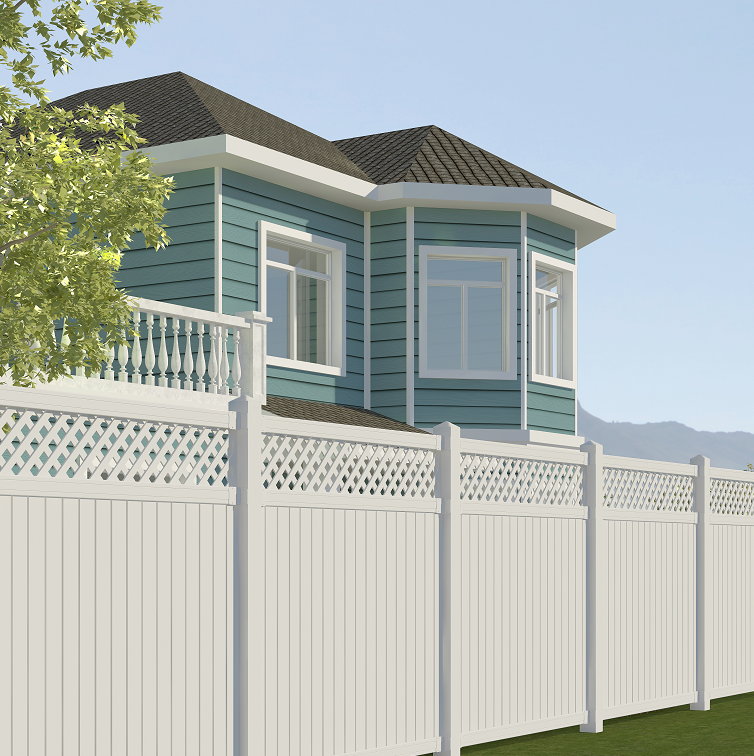
Premium PVC Privacy Fence with Decorative Lattice Top
A stylish feature fence combining privacy, elegance and practicality
Enhance your property's street appeal with a premium PVC privacy fence featuring solid lower panels and a decorative diamond lattice top. Designed to balance privacy with openness, this elegant fencing style creates a distinctive architectural feature while allowing natural light and airflow to pass through the upper section.
Ideal for front boundaries, side fences, gardens and outdoor entertaining areas, this design offers a refined alternative to conventional solid fencing.
Key Features & Benefits
Elegant Lattice-Top Design
The decorative diamond lattice creates a sophisticated finish, adding character and visual interest to your property's boundary. The combination of solid panels and open lattice delivers a stylish, balanced appearance.
Privacy Without Feeling Enclosed
Solid tongue-and-groove panels provide screening at the lower level, while the open lattice above maintains a lighter, more spacious feel.
Improved Light & Airflow
The open lattice design allows more light and air to pass through the upper section, helping outdoor spaces feel brighter and less enclosed.
Attractive from Both Sides
Designed to create a neat, coordinated appearance on either side, making it a great choice for shared boundaries and visible front or side fencing.
Three-Rail Construction
The three-rail configuration provides additional structural support and helps maintain a rigid, well-finished fence system.
Aluminium-Reinforced Bottom Rail
An internal aluminium insert strengthens the bottom rail, helping reduce sagging and improve structural support under suitable installation conditions.
Low-Maintenance PVC
Enjoy a clean, attractive finish without the need for painting or staining, including the decorative lattice. Occasional washing is generally all that's needed to keep the fence looking its best.
UV-Stabilised & Rot-Resistant
Manufactured from UV-stabilised PVC to help withstand outdoor exposure. Unlike traditional timber, PVC will not rot and does not require regular protective coatings.
What's Included
Each fence set includes:
1 × PVC fence post, designed for a 1.8m-high fence configuration
1 × Decorative diamond lattice top insert
9 × Tongue-and-groove (T&G) privacy panels for the solid lower section
3 × Rails (top, middle and bottom)
1 × Aluminium reinforcement insert in the bottom rail
6 × Rail mounting brackets with screws
1 × Flat post cap
Warranty & Material Safety
5-year manufacturer warranty, subject to the applicable warranty terms and conditions.
Lead-free materials, providing added peace of mind for family homes and outdoor living spaces.
Ideal Applications
The Premium PVC Lattice-Top Fence is an excellent choice for:
Front boundary fences that enhance street appeal
Side boundaries requiring privacy with a decorative finish
Garden enclosures and landscaped outdoor spaces
Patio and entertaining areas
Residential properties seeking a balance of privacy and visual openness
A Feature Fence That Makes an Impression
Combining solid privacy panels, decorative diamond lattice and reinforced rail construction, this premium PVC fencing style delivers an attractive, low-maintenance boundary for modern homes.
Whether you're upgrading an existing fence or completing a new landscaping project, the lattice-top design adds a refined finishing touch to your property.
Contact us today to discuss your fencing requirements and create a boundary that complements your home.
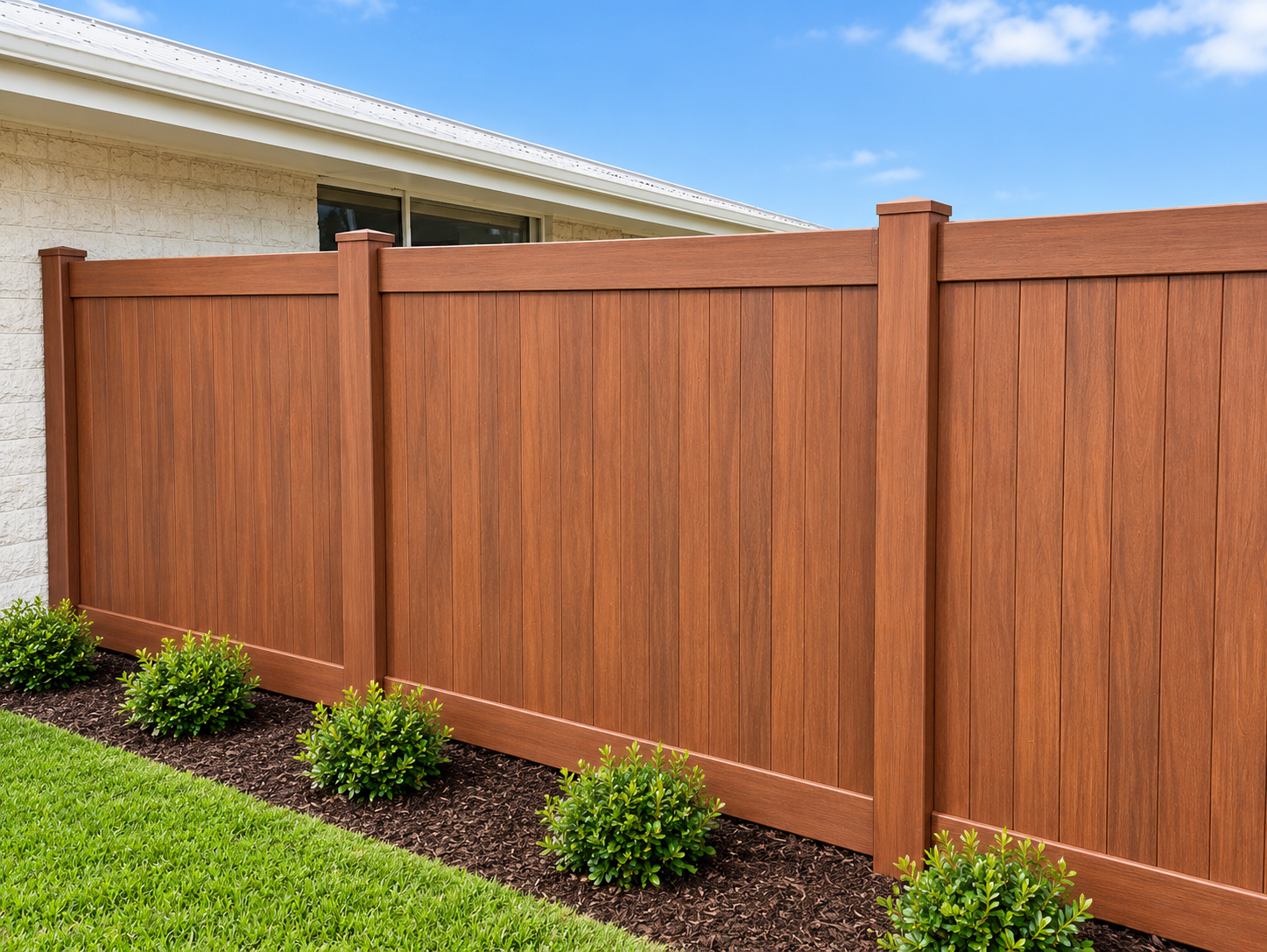
Premium Wood-Grain PVC Privacy Fence – 1.8m × 1.8m
Product Code: LJ866615
Achieve the timeless appeal of natural timber with the durability and convenience of modern PVC fencing. Featuring a realistic wood-grain finish and a premium, heavy-duty construction, this privacy fence delivers a sophisticated appearance without the ongoing maintenance associated with traditional timber.
Designed for residential properties and New Zealand conditions, the LJ866615 combines enhanced structural support, full-privacy panels and a refined timber-look finish for a long-lasting boundary solution.
Product Specifications
Product code: LJ866615
Fence height: 1.8m (1800mm)
Section width: 1.8m (1800mm)
Finish: Premium wood-grain timber look
Construction: Heavy-duty PVC with aluminium-reinforced bottom rail
Key Features & Benefits
Authentic Timber-Look Finish
Enjoy the warmth and natural character of timber with a realistic wood-grain texture. The premium finish brings a refined, high-end appearance to your outdoor space without the upkeep of traditional wooden fencing.
Heavy-Duty Construction
Featuring thicker, heavier PVC profiles, this premium range is designed to provide increased stiffness and a substantial, quality feel.
Aluminium-Reinforced Bottom Rail
An internal aluminium insert strengthens the bottom rail, helping reduce sagging and improve structural support over time.
Full-Privacy Tongue-and-Groove Panels
The interlocking tongue-and-groove (T&G) boards create a solid privacy barrier, helping screen neighbouring properties and establish a more secluded outdoor environment.
Designed for New Zealand Conditions
Developed with UV resistance and wind performance in mind, this fencing range is designed to handle outdoor exposure. Performance will depend on site conditions and correct installation.
Low-Maintenance Performance
No painting, staining or oiling required. PVC provides a practical alternative to timber, eliminating concerns associated with timber rot and helping avoid common issues such as warping and corrosion.
What’s Included
Each 1.8m × 1.8m fence kit includes:
1 × Heavy-duty fence post (2.44m long for secure in-ground installation)
1 × Flat post cap
2 × Rails (top and bottom)
1 × Aluminium reinforcement insert for the bottom rail
6 × Tongue-and-groove (T&G) boards
2 × U-channels
4 × Locking channels
Installation Options
Professional Installation
Prefer a professionally finished result? Our installation team is available for eligible projects. Contact us for a tailored quotation.
Warranty
5-year material warranty covering qualifying material defects under normal use, subject to the applicable warranty terms and exclusions.
3-year installation warranty available when installation is completed by our team, subject to the applicable conditions.
Matching Gates Available
Complete your fencing project with a matching single gate in the same premium wood-grain finish.
For a coordinated result and better project value, enquire about our fence and gate package pricing.
A Premium Alternative to Traditional Timber
The LJ866615 Premium Wood-Grain PVC Privacy Fence combines the natural look of timber with modern materials and reduced maintenance requirements. With its heavy-duty profiles, reinforced bottom rail and elegant finish, it's an ideal choice for homeowners seeking privacy, durability and a sophisticated outdoor aesthetic.
Contact us today to discuss your project, installation options and matching gate packages.
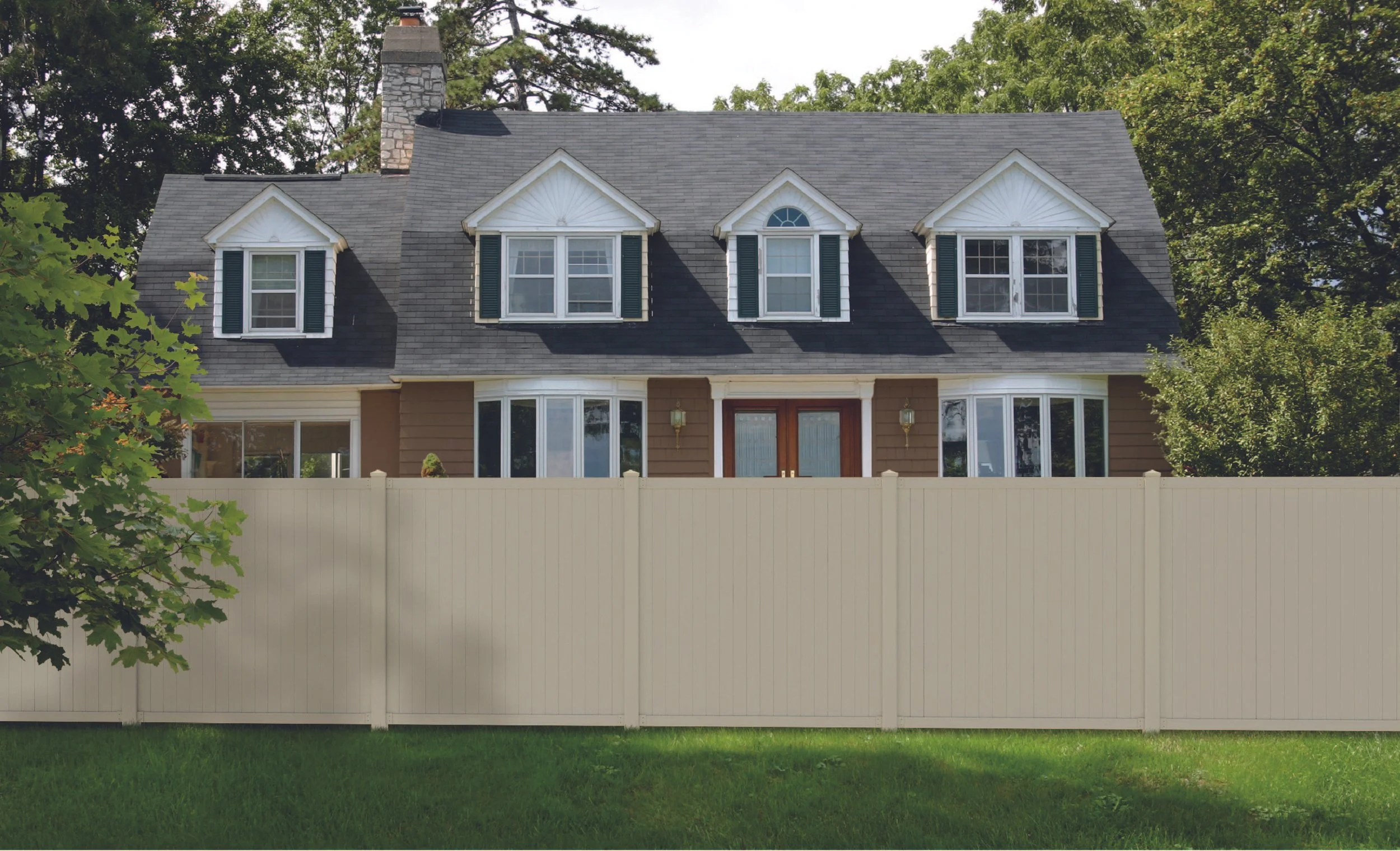
Premium Beige/Tan PVC Privacy Fence – 1.8m × 1.8m
Product Code: LJ8701
Bring warmth, privacy and a refined finish to your outdoor space with our Premium Beige/Tan PVC Privacy Fence. Designed as a sophisticated alternative to traditional white fencing, its natural, earthy tone complements gardens, brickwork, timber features and contemporary home exteriors.
Combining a timeless appearance with durable, low-maintenance materials, this fencing system is ideal for homeowners seeking long-lasting privacy without the upkeep associated with traditional timber.
Product Specifications
Product code: LJ8701
Fence height: 1.8m (1800mm)
Section width: 1.8m (1800mm)
Colour: Premium Beige / Tan
Material: Virgin PVC with internal aluminium reinforcement
Key Features & Benefits
Premium Beige/Tan Finish
The warm, neutral colour offers a softer, more natural aesthetic than standard white fencing. It blends seamlessly with landscaped gardens, brick homes and timber features while enhancing the overall street appeal of your property.
Full-Privacy Tongue-and-Groove Panels
The 1.8m-high interlocking tongue-and-groove (T&G) panels create a solid privacy barrier, helping screen neighbouring properties and provide a more secluded outdoor environment. The dense panel construction may also help reduce some surrounding noise.
Reinforced for Added Strength
An internal aluminium insert within the bottom rail helps improve structural support, reduce sagging and enhance resistance to wind loads.
UV-Stabilised for New Zealand Conditions
Manufactured using UV-stabilised PVC to help resist fading and surface chalking caused by prolonged sun exposure.
Low-Maintenance Performance
Enjoy a clean, consistent finish without the need for regular painting, staining or sealing. The beige surface can also make everyday dust and rain marks less noticeable than on white fencing.
Family- and Pet-Conscious Materials
Made from lead- and cadmium-free materials, providing added peace of mind for family homes and pet-friendly outdoor spaces.
Section Kit Contents
Each 1.8m × 1.8m fence section includes:
1 × Beige fence post
1 × Flat post cap
2 × Rails (top and bottom)
1 × Internal aluminium reinforcement insert (pre-installed in the rail)
9 × Tongue-and
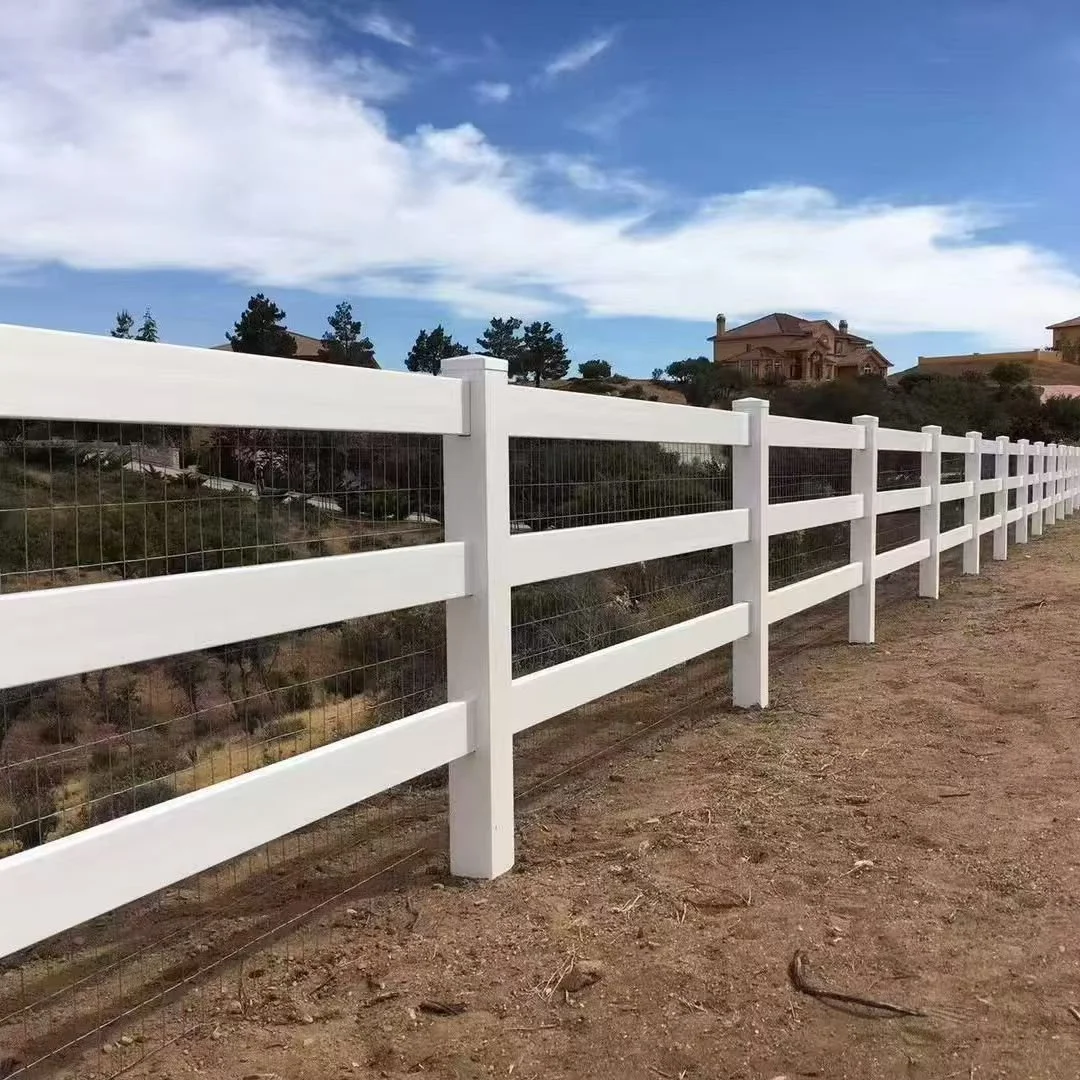
Heavy-Duty 3-Rail PVC Farm & Horse Fence – 1.5m High
Product Code: LJ3973
A durable, low-maintenance fencing solution designed for horses, livestock and rural properties. Standing 1.5 metres high, this heavy-duty 3-rail PVC fence provides a strong, clearly defined boundary while maintaining excellent visibility across your property.
Combining a clean, traditional farm-fence appearance with the practical benefits of modern PVC, it offers a long-lasting alternative to conventional timber fencing.
Product Specifications
Product code: LJ3973
Fence height: 1.5m (1500mm)
Section length: 2.4m (2400mm)
Price: $99 per section, including GST
Approximate cost: $41 per linear metre, including GST
Each Section Includes
1 × Heavy-duty fence post
3 × Reinforced, ribbed PVC rails
1 × Flat post cap
Key Features & Benefits
Heavy-Duty 3-Rail Construction
The additional rail and 1.5m fence height provide a more substantial boundary for horses and livestock, helping discourage leaning, pushing and attempts to jump.
Designed with Horse Safety in Mind
Smooth PVC surfaces eliminate splinters and exposed nails associated with timber fencing. The rail design also provides a degree of impact flexibility, helping reduce the risk of injury on contact.
Low-Maintenance Performance
Forget regular painting, staining and rust treatment. PVC offers a clean, professional appearance with minimal ongoing maintenance.
Rot- and Warp-Resistant
Unlike traditional timber, PVC will not rot and is resistant to moisture-related deterioration and warping.
UV-Stabilised for New Zealand Conditions
Manufactured using UV-stabilised PVC to help withstand exposure to the New Zealand climate.
Resistant to Cribbing
PVC provides an alternative to timber rails that horses may chew, helping reduce damage associated with cribbing.
Lead- and Cadmium-Free Material
Made using lead- and cadmium-free material for added peace of mind.
Simple DIY Installation
Designed for straightforward installation, the rails slot or click into the posts, eliminating the need for conventional nails or rail brackets.
For a straight fence run, an additional end post will generally be required to finish the exposed end. Corner configurations and overall layout will determine the final quantities needed.
Not sure how many sections or posts you need? Send us a simple sketch of your fence layout, or provide your total fence length and the number of corners. We can help you work out the quantities required.
Warranty
Includes a 5-year material warranty covering fading and material defects, subject to the applicable warranty terms.
Pickup & Nationwide Freight
Local pickup: Christchurch
Freight: Nationwide delivery available, with bulk orders welcome
Collection advice: A suitable trailer is recommended due to the length of the fencing components.
A Smarter Alternative to Timber Fencing
Whether you're fencing a paddock, creating a livestock boundary or upgrading an existing rural property, the LJ3973 Heavy-Duty 3-Rail PVC Fence offers a practical combination of durability, clean styling and reduced maintenance.
Contact us with your measurements for help calculating your fencing requirements.
Clarity buys Confidence
We won’t promise what we can’t back up. The product carries a [5-year] warranty covering brittleness, cracking and fading. Lab tests simulate sun and heat, but nothing replaces time in the field, which is why we put the warranty in writing.
How long will it last?
1
PVC is tough, but not unbreakable. A hard impact can break it, and lower-grade PVC can become brittle in extreme cold, so quality like ours and correct installation both matter.
Can it crack in the cold or from a knock?
2
In a lab test, a full privacy panel resisted a load equal to about 100 km/h of wind pressure without failing, but its top rail cracked when the load rose about 19% higher. So it’s built for strong wind, not unbreakable. We install to the manufacturer’s specification, and if your site is very exposed, we’ll tell you before we quote.
Is it capable of handling 100 km/h winds?
3
Will it fade or turn yellow?
4
UV protection is built in. In a 1000-hour accelerated UV test, the woodgrain panel showed only slight colour change. Lab tests don’t replace years in your yard, so any PVC will change a little with age.
Is it safe for kids and pets?
5
Lab tests on the panel found no detectable lead, cadmium or mercury, and none of the common phthalates. The surfaces are smooth, with no splinters.
Do I have to paint or maintain it?
6
No painting or staining. For cleaning, wash it with a hose and mild soap.
How much does it cost compared to timber, and who pays on a shared boundary?
7
PVC usually costs more on day one, but you stop paying for stain, paint and repairs. On a shared boundary, your neighbour usually only has to contribute to a standard fence, so the PVC upgrade is typically your cost. We’ll quote PVC and a standard timber fence side by side, so you can compare real numbers.
Are you ready?
-
Buying a fence shouldn’t be stressful. Here’s what to think about before you call, and what happens once you do.
-
You don’t need all the answers. A rough idea is enough, and we’ll help with the rest.
Is it a boundary fence or an internal one? On a shared boundary, talk to your neighbour first. Under the Fencing Act 1978, neighbours usually contribute to a standard fence, and the PVC upgrade is typically your cost.
Roughly how long is it? A guess in metres is fine. Pacing it out or sending a photo helps.
What style are you leaning towards? Woodgrain, white, beige, lattice-top, semi-privacy, picket or ranch rail. Not sure? Let’s talk about it.
Is there anything special about the site? Slopes, an old fence to remove, trees, gates, or a pool nearby. Pool fences have stricter rules, so tell us early.
Do you have a rough budget in mind? PVC usually costs more on day one than timber. We’ll quote it side by side with a standard timber fence so you can compare real numbers.
-
1. Get in touch
Fill in the quick form or call us on 021 091 02537. Tell us your suburb, roughly how many metres, and the style you like. Add a photo if you can.2. Free site visit
We come to you, measure up, check the ground and access, and talk through styles, heights and gates. No pressure and no obligation.3. Written quote
You get a clear quote. If you want, we’ll price a timber option next to it.4. Book it in
Say yes and we’ll confirm your install date.5. Installation
We install to the manufacturer’s specification. Most fences take 2-5 days. If we’re removing an old fence, we’ll agree that with you first.6. Handover
We walk the fence with you and leave you a care guide. Cleaning is a hose and mild soap. Your warranty paperwork is sent to you / explained at handover. -
A free measure and quote, with no surprises.
Honest advice, including when timber is the better choice.
A fully insured install.
The warranty in writing.
Get In Touch
If you're interested in working with us, complete the form with a few details about your project. We'll review your message and get back to you within 48 hours.